An accessibility audit finds that a modal cannot be used by keyboard.
At first, the defect looks local. Add focus management, repair the tab order, make the close control operable, and move on.
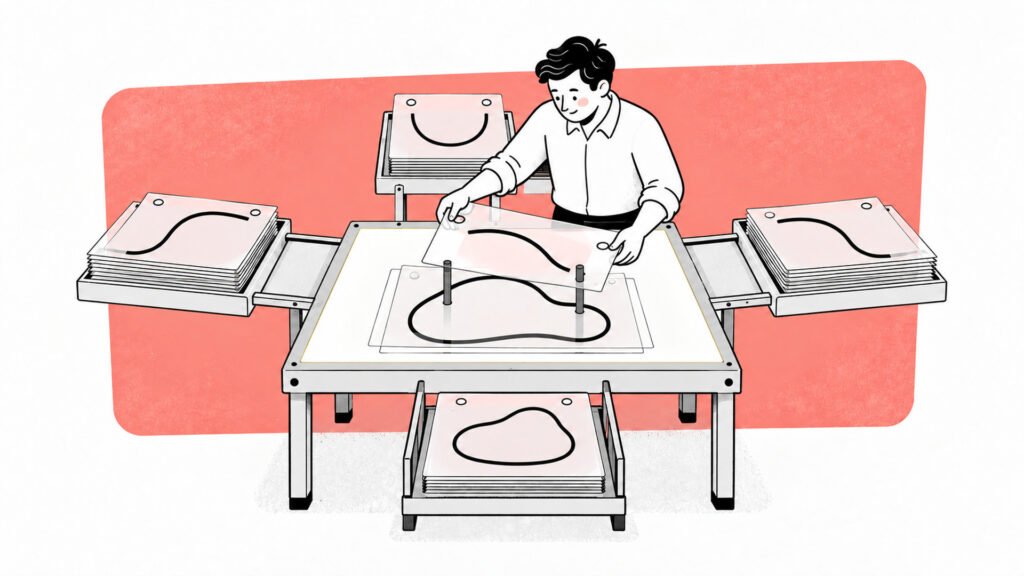
Then the team discovers three different modal components. Each behaves differently. One comes from the design system, one belongs to an older product area, and one was created for a recent campaign. Nobody owns the shared interaction. The expected behavior is not documented. Closing the modal sometimes discards work and sometimes preserves it.
The audit found more than a missing keyboard interaction. It found a product decision the company had avoided making.
Accessibility work is often managed as a list of design and engineering defects. Some findings really are local defects, and they should be fixed without turning every missing label into a strategy workshop. Repeated and cross-product failures tell a different story. They expose undefined hierarchy, inconsistent interaction rules, weak error handling, and ownership gaps that affect disabled people first and often most severely.
The value of the audit is not that accessibility “benefits everyone.” That familiar phrase can move disabled users out of the center of the work. The immediate obligation is to make the product usable by people who encounter barriers today. The wider organizational lesson is that accessibility forces an interface to declare how it is supposed to work.
Accessible use requires the interface to have a structure
A sighted mouse user can sometimes compensate for a weak interface. Position, color, motion, and visual proximity provide clues even when the underlying structure is inconsistent. A keyboard or screen-reader user relies more directly on order, semantics, names, states, and predictable behavior.
That does not make assistive technology unusually demanding. It shows how much of the product’s meaning was left implicit.
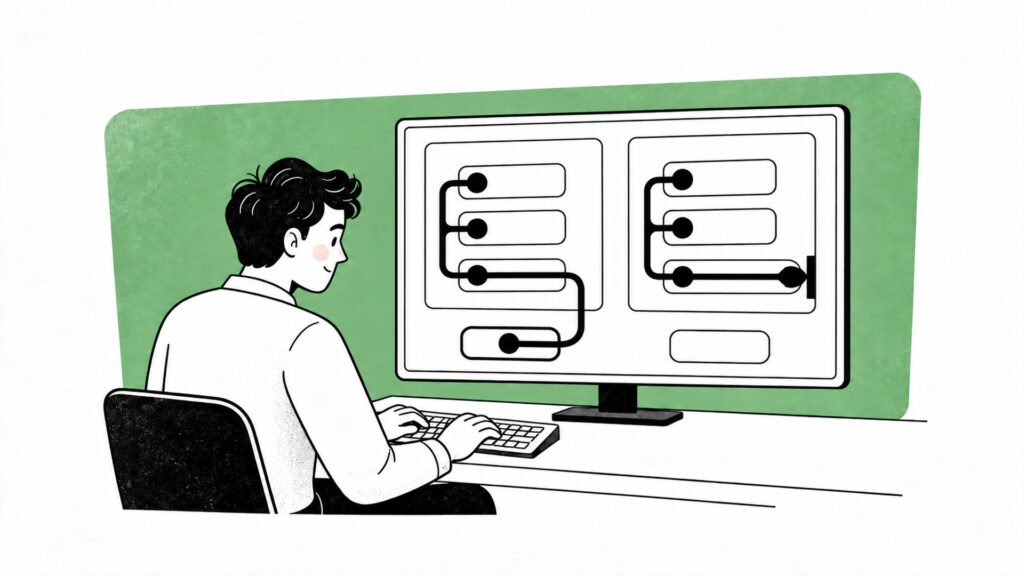
The Web Content Accessibility Guidelines explanation of keyboard access makes the basic requirement clear: functionality should be operable through a keyboard interface when the task can be performed with a keyboard. Meeting that requirement asks practical product questions. Which element receives focus first? What counts as the next action? When a dialog closes, where does the user return? Can a person leave a component without losing context?
These are interaction decisions. Code expresses them but cannot decide them alone.
The same is true of headings, landmarks, field labels, and status messages. Correct semantics give assistive technologies information about relationships that visual design may communicate through size or position. When teams cannot agree on the right semantic structure, the disagreement often points back to an unresolved product model. They have not decided which content is primary, which action is subordinate, or which state the user is currently in.
Inconsistency is often an ownership problem
Accessibility reviews frequently produce clusters of similar findings across separate journeys. Buttons have different names for the same action. Validation messages appear in different places. Components that look identical have different keyboard behavior. Teams repair each instance, but new versions keep appearing.
The pattern usually survives because no one owns the rule beneath it.
A design system may contain accessible components while product teams remain free to create substitutes. Engineering may own implementation but not the content that gives a control an accessible name. A compliance team may commission an audit without authority to change product priorities. A feature team may fix its screen while the shared component remains untouched.
The W3C guidance on predictable interfaces addresses consistency in navigation, identification, and changes of context because unexpected behavior creates real barriers. For an organization, predictability requires more than a checklist. Someone has to decide which patterns are standard, maintain them, and prevent local delivery pressure from creating another exception.
Repeated accessibility defects should be traced to their production path. Where was the component specified? Did research include people who use assistive technology? Was the accessible behavior tested before release? Could a team reuse the correct pattern?
The answers locate the operating failure. The visible defect is only its latest output.
Error handling reveals the product’s operating model
Errors are unusually revealing because they sit at the point where the expected journey has already failed.
W3C’s guidance on error identification requires detected input errors to be identified and described in text. A product can comply narrowly by placing a message beside a field. A usable recovery path needs more thought.
Can the user find the problem without scanning the whole page? Does focus move in a way that preserves orientation? Is previously entered information retained? Does the message explain how to recover? If the failure came from the service rather than the user, does the product admit that? Can support understand what happened without asking the customer to repeat the entire process?
These questions cross interface design, content, engineering, service operations, and policy. A vague “something went wrong” message may be a copy defect. It may also exist because the system exposes no useful error state or the business never decided what should happen when the ordinary route breaks.
Disabled users often pay the highest price for that uncertainty. Repeating a long form, relocating focus, or contacting support through an inaccessible channel is not a small inconvenience. The recovery design has become part of whether the service is available at all.
Accessibility debt compounds across the product
A local defect can be patched. A missing rule is reproduced.
When teams duplicate inaccessible components, every future remediation becomes more expensive. When headings are chosen for appearance rather than structure, content growth increases the confusion. When error messages depend on color alone, each new form extends the same barrier. The debt includes both the defects and the product behavior built on assumptions that were never examined.
This is one reason accessibility should enter product decisions before final quality assurance. W3C’s design guidance covers issues such as clear hierarchy, visible focus, understandable instructions, and alternatives for media because these choices begin in design and content, not at the end of implementation.
Early work also produces better evidence. A team can test whether the intended task is possible with assistive technology before polishing the interface. It can learn whether a standard component works in the journey rather than assuming component conformance guarantees a usable product.
None of this removes the need for specialist audits. It changes what the organization does with the findings. The audit becomes input to product governance, not a queue of isolated repairs.
Compliance is a floor, not the final argument
The legal context has become harder for businesses to ignore. The European Accessibility Act requirements have applied to covered products and services in the EU since 28 June 2025. The underlying Directive (EU) 2019/882 sets accessibility requirements across areas including e-commerce, banking services, electronic communications, and certain hardware.
Scope, exemptions, and enforcement depend on the service and jurisdiction, so a product team should not substitute a general article for legal advice. Compliance creates a minimum standard and a reason for executive attention. It does not tell a company how to build shared ownership, resolve inconsistent behavior, or design a working recovery path.
A team can pass individual technical checks while leaving the overall journey exhausting or confusing. It can also improve a journey meaningfully while still missing a formal requirement. Both technical conformance and lived usability matter, and they answer different questions.
Turn findings into product decisions
After remediation begins, group findings by the decision they expose.
Several focus-order failures may indicate that the product has no agreed navigation model. Repeated labeling problems may point to unclear content ownership. Inconsistent form errors may reveal that teams do not share a recovery standard. Multiple inaccessible versions of the same control may show that the design system lacks either coverage or adoption authority.
Then assign the decision as well as the ticket. Define the expected behavior. Put it in the shared component or product standard. Add it to acceptance criteria. Test it with people who encounter the barrier. Give an owner enough authority to stop the inaccessible pattern from returning.
This escalation should be proportionate. A one-off coding error does not prove a governance crisis. The signal becomes stronger when a defect repeats across teams, nobody can state the correct behavior, or fixing it requires a decision outside the feature team.
Accessibility work deserves urgency because disabled people should not have to wait for an organization to become coherent. But the organization should still learn from what the work reveals.
An audit shows where people are being excluded. When the same barriers keep returning, it also shows where the product has been allowed to function without a clear decision about structure, behavior, recovery, or ownership. Fixing the code matters. Making the decision is what keeps the barrier from being rebuilt.